
Artificial Intelligence (AI) at Turing House School
PAGE UNDER CONTRUCTION
At Turing House School, we embrace the responsible use of Artificial Intelligence (AI) to enhance teaching, learning, and operational efficiency. Guided by the Russell Education Trust’s AI Policy, our approach balances innovation with ethical responsibility, ensuring that AI supports—not replaces—human judgement and professional expertise.
Why We Use AI
- To enrich learning experiences through personalised tools like intelligent tutoring systems and adaptive learning platforms.
- To support staff wellbeing by reducing workload through AI-assisted planning, marking, and administrative tasks.
- To promote digital literacy and ethical awareness among students and staff.
- To ensure data privacy and safeguarding in line with GDPR and best practice.
How AI Supports Our School
- For Students: AI tools help personalise learning, track engagement, and offer tailored feedback—always under teacher supervision.
- For Teachers: AI assists with lesson planning, curriculum development, and data analysis, helping staff make informed decisions while maintaining autonomy.
- For Operations: AI streamlines tasks like report writing, resource management, and communication, freeing up time for meaningful interactions.
Ethical Use and Safeguarding
We are committed to:
- Transparent communication with parents, governors, and students about how AI is used.
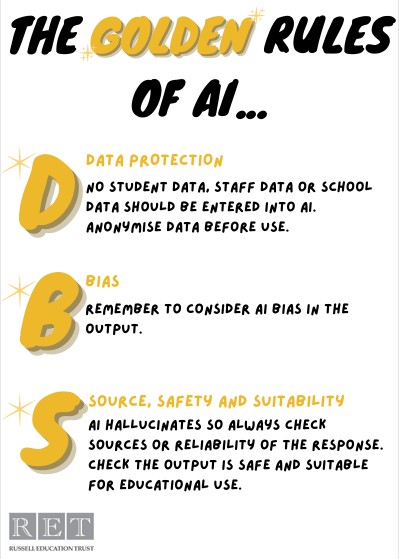
- Ensuring AI tools are GDPR-compliant and do not store personal data such as names or school identifiers.
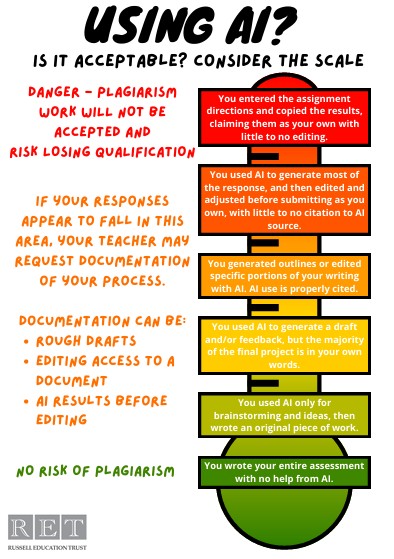
- Educating students on the risks and benefits of AI, including issues like plagiarism, bias, and misinformation.
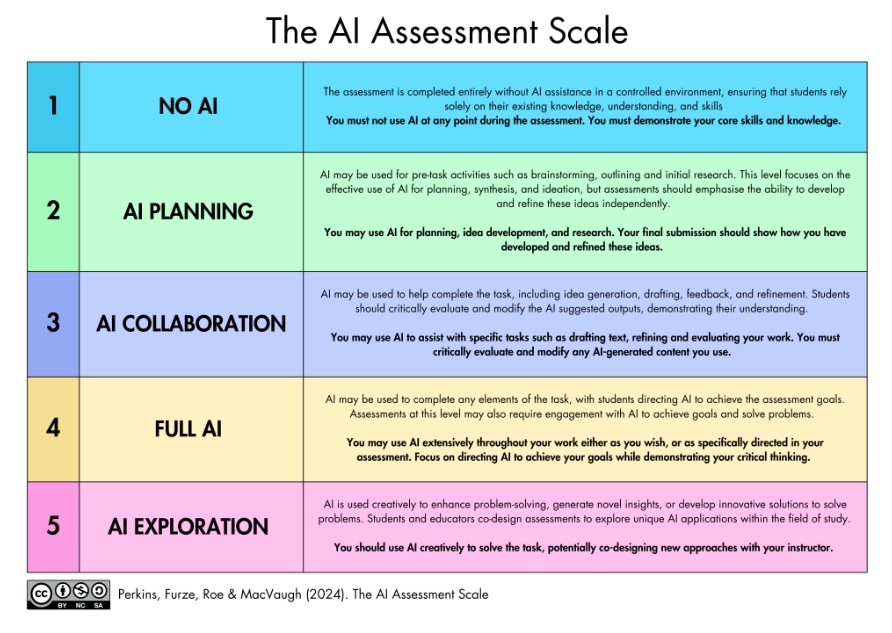
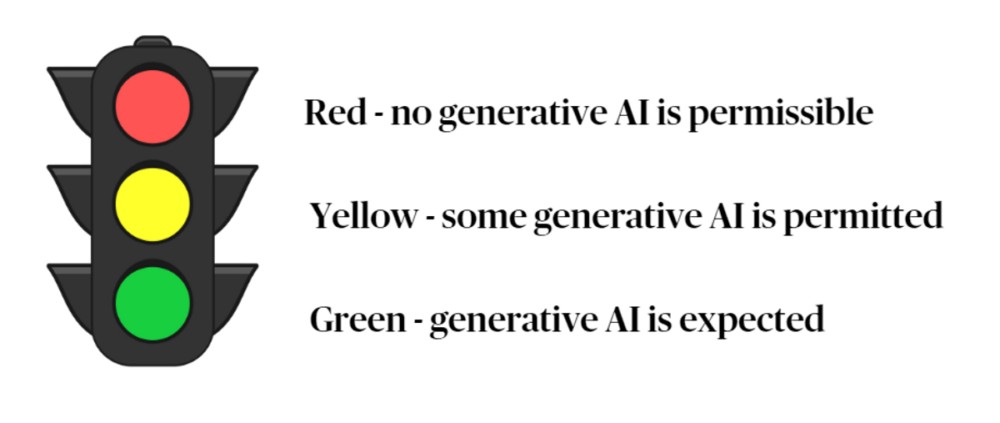
- Using a traffic light system to guide appropriate student use of AI in classwork and homework.
AI in the Curriculum
Students explore AI through Computing and PSHCE, learning:
- What AI is and how it works
- Its benefits and risks
- Its role in future careers
- How to use AI responsibly
Our delivery of AI education is covered across a range of subjects to ensure that students do not relate AI usage to a specific area. Our computing curriculum will cover aspects of AI usage on top of these bespoke sessions. From September 2026 all year 7 students will follow the AI curriculum below. Our rationale for implementing this in Year 7 has come directly from a pilot we ran in 2025 in which year 8 student feedback indicated that this would be better delivered in Year 7.
|
1 |
Exploring AI: Tools, Needs, and Risks |
Science |
Term 3 |
|
2 |
AI as a Tool, Not a Substitute |
History |
Term 3 |
|
3 |
How to Prompt AI with Useful Questions |
English |
Term 3 |
|
4 |
Identifying and evaluating content from AI or humans |
PSHCE |
Term 4 |
|
5 |
AI for problem solving in school and beyond |
Maths |
Term 4 |
|
6 |
Refinement, originality, and reflection |
Computing |
Term 4 |
|
7 |
AI in real-world applications |
Geography |
Term 3 |
|
8 |
What Makes Us Human – Reflection and Next Steps |
RP |
Term 4 |
Oversight and Accountability
AI tools are only introduced following a formal approval process involving school leaders and the RET Operations Team. All tools undergo trial periods, impact assessments, and regular reviews to ensure they meet educational, ethical, and safeguarding standards.
AI Navigation
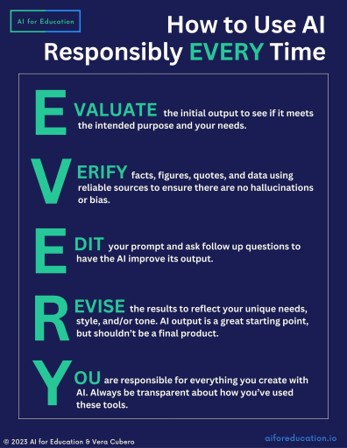
Navigating AI is very complex and we hope through education that students at THS become proficient at using AI and can use it safely and ethically. We recommend using the images below to help navigate your AI journey.
 If you
would like to find out more, please read our two AI related policies here. Please note that AI is constantly
moving and these polices will also change on a regular basis.
If you
would like to find out more, please read our two AI related policies here. Please note that AI is constantly
moving and these polices will also change on a regular basis.
For further advice on using Artificial Intelligence correctly, please access these resources